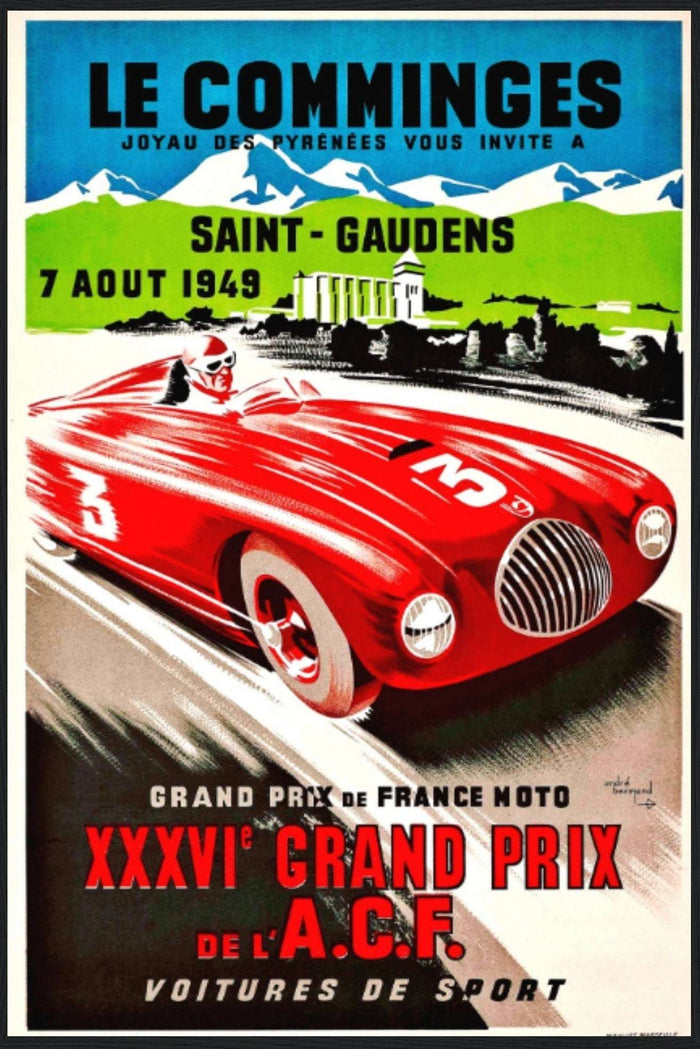
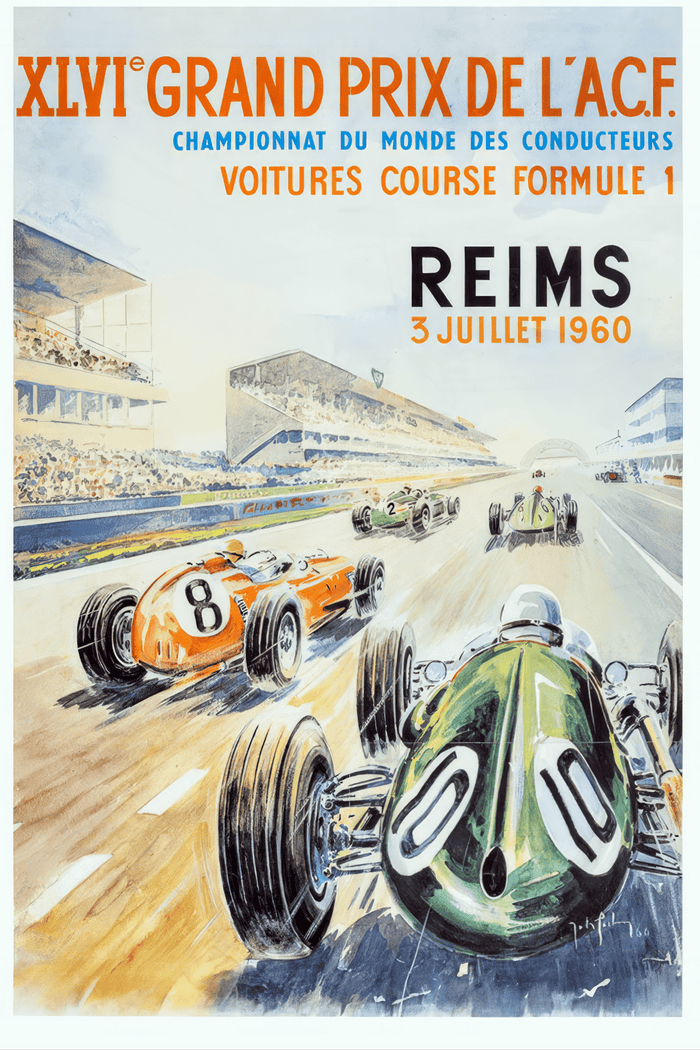
Short answer: most “vintage” Monaco Grand Prix posters you’ll find for sale are not originals. Many are authorized reissues printed in the 1980s, and the rest are modern prints like ours. That’s fine, as long as you know which one you’re buying.
What is an original Monaco Grand Prix poster?
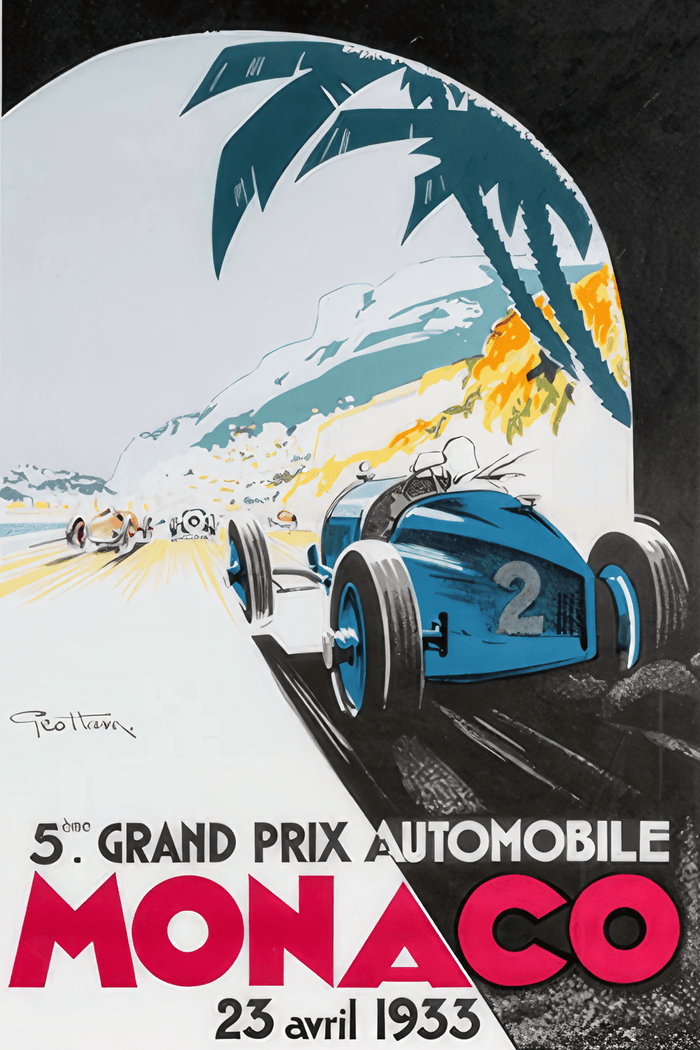
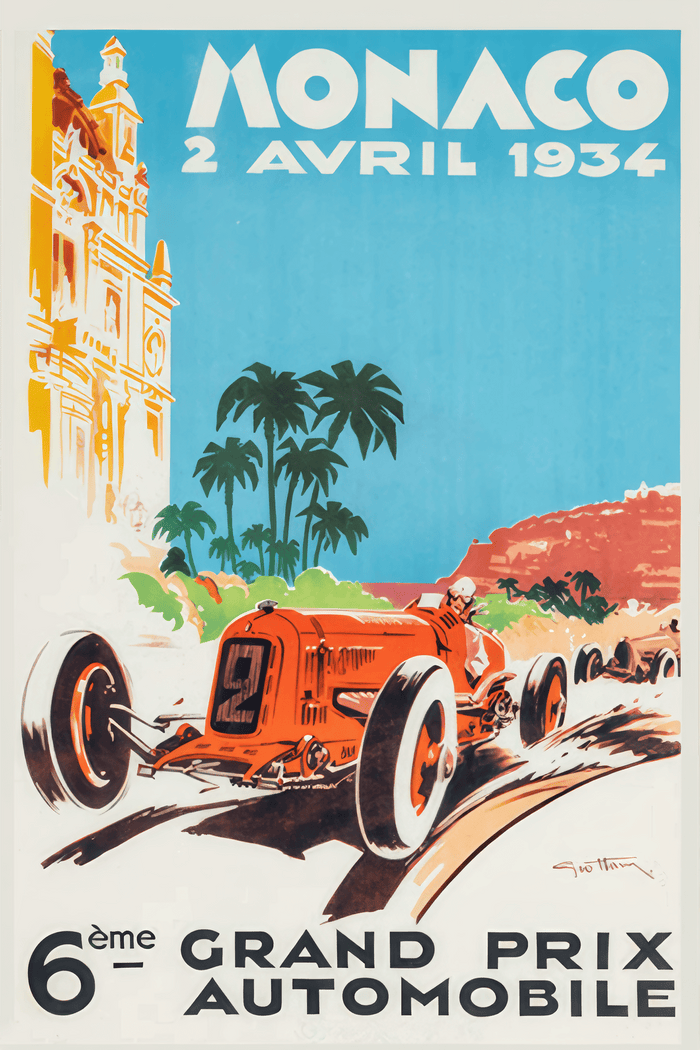
The 1930s Monaco posters were printed in Monte-Carlo, at about 31 × 47 inches. Robert Falcucci designed the early years, starting in 1930, and Géo Ham designed 1933 to 1937. Originals that survive turn up at poster auctions and specialist dealers, often backed on linen.
What are the 1980s reissues?
In the 1980s the Automobile Club de Monaco authorized reissues of several classic designs, printed as lithographs at roughly 39 × 27 inches. They’re handsome posters in their own right, but they are not period originals. Some are marked on the back as reissued with the club’s permission.
How can you tell an original from a reissue?
- Size. 1930s originals run about 31 × 47 inches; the 1980s reissues are smaller, around 39 × 27.
- Markings. Check the back and the bottom margin for a reissue notice or a later printer.
- Price. If it’s cheap, it isn’t an original. One dealer listed an original 1966 Monaco poster at £1,950.
When in doubt, buy from an established poster dealer who guarantees authenticity in writing.
So why buy a print?
Because our prints are priced for living spaces, not auction houses. These are not original antique posters. They’re faithful reproductions, printed to order, for people who want the design on their wall rather than the artifact in a vault.
We use 200gsm paper, which is much thicker than normal paper, much closer to the thickness of a greeting card. The thicker paper absorbs the colors, giving them depth, and the matte finish makes them pop.
Walls, not posters, is how we think about it. You want something that looks good in the room and works with what’s already there. That’s why we keep the Racing collection small. Just because we could offer every racing poster ever printed doesn’t mean we should.
How are the Monaco files prepared?
We turn down far more archival source images than we use. If the source isn’t good enough to print well, the design doesn’t make the catalog, and if a file won’t hold up at the largest size, we don’t sell it at that size.
For our vintage catalog, AI is our scissors and eraser, not our artist and editor. We use it to clean up scans and recover detail, and the work is more about restraint than enhancement. The goal is not to make an old poster look new, but to let the design speak clearly again. (Our contemporary catalog is a different story. That’s where we experiment with AI as a creative tool, and we say so on those pages.)
How should you hang them?
The Monaco posters look okay by themselves, but they look best as a set: in a pair, three side by side, or a group of four. That’s why we recommend 12×18 for this series, even though 16×24 is our most versatile size elsewhere. They’re very colorful, so a backdrop like exposed brick makes a pair or a set of four look even better.
Shop the Monaco prints
- Monaco Grand Prix Poster, 1930
- Monaco Grand Prix Poster, 1933
- Monaco Grand Prix Poster, 1934
- Monaco Grand Prix Poster, 1936
- Monaco Grand Prix Poster, 1966
- The full Racing and Motorsports collection
See it on your wall.
Sources
Original sizes, artists and printer: Poster Auctions International, PAI-LVII and IVPDA. 1980s reissue example: Galerie 123. 1966 original listing: AntikBar.